4/25/11

SP 2011 WEEK 12

-photo by Diane Arbus

Today is Exam Day.

Submit your edited Final Project photos to the DROP folder, just keep adding a new number after the slug.

DO NOT GIVE SAME NAMES AS PREVIOUS WEEK'S photos.

FOR NEXT WEEK:
  • Possibility class may be canceled next week, check email.
  • Only 2 weeks remaining.
  • Bring in more Final Project photos & audio.
  • Please review Final Projects requirements DUE 5/9/11.
  • Everyone should be more than halfway done with shooting portion of project.
  • record audio, find music, etc.
  • Submit proposal if you have not done so, or if your subject has changed.
  • **Remember, this project should reflect 5-6 weeks of work.
  • slug: lastname_finalproject01.jpg, lastname_finalproject02.jpg, etc

4/17/11

SPRING 2011 WEEK 11

Photo by Eddie Adams


  1. Assignment #10 Illustration
  2. Final Projects; First Set of photos due
  3. Post WWII-current


FOR NEXT WEEK:

  1. LAST CHANCE: submit ALL missed assignments. Any missed work must be submitted by next week: 4/25/11.
  2. Final Projects; new work due: 4/25/11
  3. REMINDER: Exam next week: 4/25/11
EXAM:
  • -No make-up exams.
  • -review all the Power Point Presentations. Especially if you were absent.
  • -Be aware that many of the PPP’s contained more material than we discussed in class.
  • -visit web sites/links listed in the PPP’s & BLOG.
  • -review all entries on the class blog this semester: http://ramapophotoj.blogspot.com/
  • -be sure you understand each shooting assignment & different types of photos.
  • -review all photo essays discussed\assigned in class, and those in the PPP’s.
  • -be familiar with important photographers, agencies, publications, discussed in class.
  • -Read & study all docs in PHOTOGRAPHER’s BIO’s folder.
  • -Know their names, their work, their era (no dates), why they are important.
  • -make sure you have completed all the reading assignments.
  • -be sure to watch the film on James Nachtwey to the end; War Photographer.

4/4/11

SPRING 2011 -WEEK 10

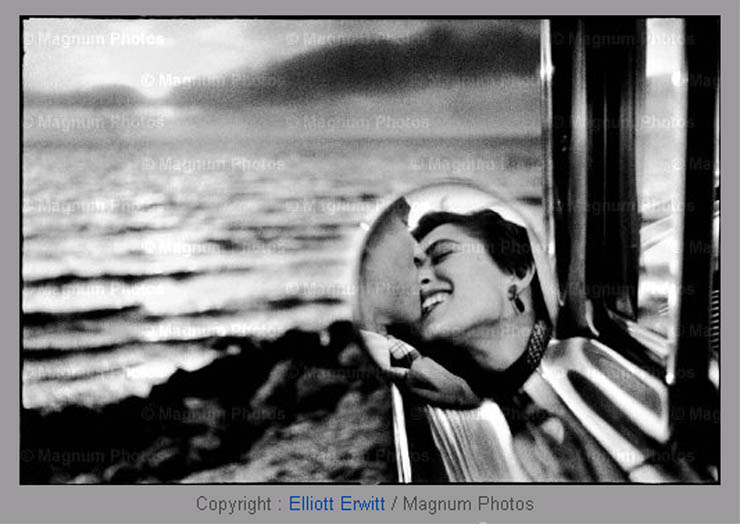
photo by Elliott Erwitt / Magnum

AGENDA


  1. Let's look, Soundslide, ASSIGNMENT #09 SOUNDSLIDE TOWN
  2. History of Photojournalism; W. Eugene Smith, Elliott Erwitt, Eddie Adams, Charles Moore, James Nachtwey, see PPP.
  3. Final Projects
  4. NO CLASS NEXT WEEK!

due April 18:
  1. First set of Final Project Photos
  2. Final Project proposal
  3. Illustration
  4. Any missed assignments due now

4/3/11

ASSIGNMENT #10 Illustration

ASSIGNMENT #10 Illustration

(Due Monday April18th)

Part I:

Make an Illustration

Make an illustration for the following topic:

The War in Iraq has been a costly war.

Research and select one dimension of this military conflict that has been costly and make an illustrative image.

Remember, an illustration is a Non-Documentary photograph, and can be completely set up, manipulated, or orchestrated. Make the image has a message. Make sure it is executed with a clear preconceived visual solution. REVIEW EXAMPLES IN PPP.

The image’s message must be communicated clearly.

This is an opportunity to take an idea and transform it into a representative visual, with manipulated guidance. BE CREATIVE AND CONCEPTUAL.

Photo can be montage, multiple images, computer or darkroom altered images.

Image alteration is allowed, BUT not required.

*Students must complete:

1. Select (1) best photo.

2. SLUG PHOTO AS FOLLOWS:

Last name_illustration.jpg EXAMPLE: franklin_ illustration.jpg

3. Place image in the “drop folder.”

3/27/11

SPRING 2011 WEEK 9


Life was the first all-photography U.S. news magazine and dominated the market for more than forty years. Life celebrated the "photo essay." Life was wildly successful for generations before its prestige was diminished by economics and changing tastes. Since 1972, Life has twice ceased publication and resumed in a different form, before ceasing once again with the issue dated April 20, 2007. Recently, the brand name continues on the Internet. -Wikipedia

AGENDA

  1. Photojournalism categories
  2. Final Projects?
  3. Let's look ASSIGNMENT #8 CITY or TOWN
  4. History of Photojournalism; Joe Rosenthal, Robert Capa, Magnum
  5. Audio slideshows lesson
  6. How to guides: Audacity, Soundslides, more on Audacity
  7. Multimedia Tips & Tutorials
  8. REMINDER: Exam 4/25/11 -no make-ups given.

3/26/11

ASSIGNMENT #09 SOUNDSLIDE FOR CITY OR TOWN (PART 3)

ASSIGNMENT #09 SOUNDSLIDE FOR CITY OR TOWN (PART 3)

(Due 4/4/11)

Complete audio slide-show using Soundslides, of photo essay on a selected place.

Part 3 of 3-week assignment

PART I

READING:

History of Photojournalism; ( see photographers bios or the Blog)

HENRI CARTIER-BRESSON, ELLIOTT ERWITT, EDDIE ADAMS, CHARLES MOORE. DIANE ARBUS

PART II

Finish shooting and editing photos

PART III

Edit your music selection to 1:15 or less, use an editing program such as Audacity to trim. (Write, record, edit narration for Soundslide if desired)

Each Soundslide must incorporate music.

Audacity Tutorial: http://audacity.sourceforge.net/manual-1.2/tutorials.html

Soundslides Tutorial: http://support.soundslides.com/index.php?pg=kb.book&id=2

PART IV

Make a Soundslide using your photos and edited music.

Soundslide must be 1:15 or less and include:

1. Title slide

2. Closing text slide, credits.

Include special text:

This multimedia presentation is not for publication. For educational purposes only.

3. Give music credit at the end.

*FOR NEXT WEEK, students must submit:

1. Rename & submit “publish to web” folder only.

2. Rename FOLDER AS FOLLOWS:

Last name_townname

EXAMPLE: franklin_hoboken

3. Place folder in the “drop folder.”

4. Do not submit project folder.

3/21/11

SPRING 2011 WEEK 8

photo by DOROTHEA LANGE / FSA

What's due:
  1. Photojournalist Paper
  2. Final Projects idea
  3. ASSIGNMENT #08 CITY or TOWN, part 1
  4. ASSIGNMENT #6; Covering a Live Event
Today:
  1. History of Photojournalism; FSA, DOROTHEA LANGE, WEEGEE, LIFE MAGAZINE
  2. EXAM: April 25th -no make-ups.
  3. Multimedia

3/19/11

ASSIGNMENT #08 CITY OR TOWN (PART 2)

ASSIGNMENT #08 CITY OR TOWN (PART 2)

(Due 3/28/11) Photo essay on a selected place

Part 2 of 3-week assignment

PART I

READING:

History of Photojournalism; ( see photographers bios or the Blog)

1. MAGNUM

2. ROBERT CAPA

PART II

SHOOTING ASSIGNMENT

Continue shooting the interesting town, place, or neighborhood, in the manner of a National Geographic photo essay, see the "Places of a Lifetime." Go to same location, but at a different time of day/night, as this is a multiple-week assignment. Explore the place, further and produce a diverse set of images.

Shoot photos at various times of the day and night. Use all the techniques and strategies we've discussed in class. Focus on the people, not just the places.

use your flash if necessary.

*FOR NEXT WEEK, students must submit:

1. Select (10-15) ADDITIONAL best photos.

2. Caption photos.

3. SLUG PHOTO AS FOLLOWS:

Last name_townname_01.jpg, Last name_townname_02.jpg

EXAMPLE: franklin_ hoboken.jpg

4. Place images in the “drop folder.”

PART III

Select a piece of music, original or not, and bring to class in MP3 format. WAVE files are OK also. Select and appropriate piece that goes well with you subject.

3/7/11

SPRING 2011 WEEK 7


  1. Let's look, ASSIGNMENT #7; ALBUM COVER; using Flash
  2. REMINDER: Photojournalist Paper, due March 21stLauren Greenfield's Girl Culture
  3. Final Projects,
  4. List of (3) Final Projects subjects due March 21st.
  5. Review National Geographic essays
  6. SOUNDSLIDES
  7. Essay; Girl Culture by Lauren Greenfield
  8. EXAM: April 25th -no make-ups.
  9. History of Photojournalism; JACOB RIIS & LEWIS HINE

3/6/11

ASSIGNMENT #08 CITY OR TOWN

ASSIGNMENT #08 CITY OR TOWN

(Due 3/21/11) -Photo essay on a selected place

PART 1.

READING:

History of Photojournalism; (see photographers bios or the Blog)

1. FSA

2. WEEGEE

3. LIFE MAGAZINE

PART 2

Log onto the National; Geographic website; "Places of a Lifetime."

Study some of the photo essays.

http://travel.nationalgeographic.com/places/places-of-a-lifetime.html

PART 3

List of (3) subject ideas for Final Project.

-Submit Word document, with brief description.

PART 4

SHOOTING ASSIGNMENT

Select an interesting town, place, or neighborhood, and shoot a photo essay in the manner of a National Geographic photo essay, see the "places of a lifetime."

Be sure you select a location you can go back to the next (3) weeks, as this is a multiple-week assignment. Be sure you select a location that is visual and interesting. Explore the place, and produce a diverse set of images.

Research the town, learn what the town is known for, shoot photos relative to the town. Shoot photos at various times of the day and night. Use all the techniques and strategies we've discussed in class. Focus on the people, not just the places.

use your flash if necessary.

*FOR NEXT WEEK, students must submit:

1. Select (10-15) best photos.

2. Caption photos.

3. SLUG PHOTO AS FOLLOWS:

Last name_townname_01.jpg, Last name_townname_02.jpg

EXAMPLE: franklin_ hoboken.jpg

4. Place images in the “drop folder.”

3/5/11

SPRING 2011 FINAL PROJECT

FINAL PROJECT

Photo essay Soundslide (DUE 5/9/11) -no exceptions.

25pts


I. FINAL PROJECT

The Final Project is a 8-week project that requires each student to spend significant time with a chosen subject, to produce a well-crafted, in-depth photo essay in the form of a Soundslide. The Final Project is in lieu of a Final Exam, and should be treated as such.


The subject of this project should be a person who is interesting.

Each student must find and select a person who is multidimensional and lives life with a purpose and in a way that is interesting to others.

  • This subject will be selected by the student, with careful thought to subject selection.
  • Subject should be visual, must have various aspects of interest, must have good audio possibilities, and must be accessible to you.
  • This person cannot be family or schoolmate. It must be someone outside your daily life.
  • Each student must submit a well-written, thoroughly planned proposal of 250 words (3-4 paragraphs). The proposal must be an examined, well-planned, and strongly supported idea.
  • The Final Project is NOT a single event or photo shoot. The essay should tell the story of the subject's life. Each student must develop their essay on a week-to-week basis, and bring photos in each week for critique.
  • Each student will be graded on progression.
  • The final essay will consist of 20-30 images, with audio, in a finished Soundslide.


II. GRADING

Each final project will be graded as follows:

1. (3pts) SUBJECT SELECTION & WRITTEN PROPOSAL

  • submittal of written proposal due March 25th
  • suitability of subject for photo essay.
  • degree of difficulty.


2. (7pts) WEEKLY PROGRESSION

Work should be completed as follows:

  • #1 Proposal Due (March 25th)
  • #2 Photos due (April 4th)
  • #3 Photos due (April 11th)
  • #4 Photos due (April 18th)
  • #5 Photos due, Audio edited (April 25th)
  • #6 Soundslide roughly constructed (May 2); Audio, Photos, titles, opening, closing
  • #7 Project due (May 9th)


3. (3pts) AUDIO

  • selection of types audio used.
  • appropriateness of audio; music/natural sound/narration.
  • overall use of audio.


4. (5pts) PHOTOGRAPHY

  • overall quality of images; how well were the principles learned in this course used.
  • quality of the editing; relativity of images selected, lack of repitition.
  • variety of images; vertical, establishing shots, details, etc.
  • preparation of images; cropping, toning, color, white balance, etc.
  • caption completeness.


5. (7pts) FINISHED PRODUCT

  • quality of the Soundslide presentation; titles, colors, opening, closing, ID's, etc.
  • Sequencing of images.
  • how well criteria was met, instructions followed.
  • Length of Soundslide presentation; should be 2-3 minutes long.
  • Strength of finished product; effectiveness as a story-telling piece


III. WHAT’S DUE

  1. Rename the "publish to web folder" lastname_soundslide.
  2. Submit this folder to the DROP. Do NOT submit the entire soundslide project.
  3. Be sure you've tested your soundslide before you submit (play the INDEX file).

¨You will not receive credit for any projects that do not play.

  1. Be sure each image has a caption.
  2. Make sure all the info fields in Soundslides are filled in; Headline, caption, etc.
  3. Give credit to any music you use.
  4. Be sure to start with opening title slide. If necessary include a brief explanatory text page.
  5. Check for typos and usage errors.
  6. KEEP SOUNDLSIDE PRESENTATION UNDER 3 MINUTES.
  7. Please follow instructions carefully.

2/27/11

SPRING '11 Week 6


photo by THOMAS E. FRANKLIN / The Record
LOCATION LIGHTING. Was a camera flash used in this photo, in mid-day sun?

TODAY'S AGENDA
  1. Photos of the Week; MSNBC
  2. Let's look, ASSIGNMENT #5; Light
  3. Due two-weeks: ASSIGNMENT #6; Covering a Live Event
  4. Lesson; LIGHT part II; Flash Use
  5. History of Photojournalism; Mathew Brady
  6. Photo essay; Eye of the Storm; Times-Picayune - NOLA.com
  7. EXAM: April 25th -no make-ups.
  8. FINAL PROJECT: start thinking about a subject.
  9. Look at some Soundslides.

2/25/11

ASSIGNMENT #07 FLASH USE/ALBUM COVER

ASSIGNMENT #07 FLASH USE/ALBUM COVER

(Due 3/7/11)

Flash Usage (2 parts) Rock Star


PART 1.

READING:

National Geographic Ultimate Field Guide

Read pages 25, 95-103, 103-117

Guide to Photojournalism

By Brian Horton

Read pages 79-101“Features and Portraits; Seeing the World Around Us.”

Visual Journalism

By Christopher R. Harris & Paul Martin Lester

Read pages 63-86“Technical Considerations.”


PART 2

History of Photojournalism;

FSA (see photographers bios or the Blog)

Jacob Riis & Lewis Hine


PART 3

SHOOTING ASSIGNMENT (2) PARTS

Find a musician(s) to photograph, or an actor(s) to play a musician, and make an album/CD cover shots USING YOUR FLASH both indoors and outdoors. Also, add album title/artist text using Adobe photoshop. Plan your text placement before composing your images. Save image as Photoshop document

PART A

Photograph your musician indoors using a camera flash.

Be creative, and make personality driven images, highlighted by excellent lighting. Make well-composed and expressive photos of a person using your flash. Must be taken indoors.

***You will be graded on your creativity and use of flash.***

-Flash use should be executed perfectly.

-Set proper white balance setting be sure to have correct white balance usage.

-Use bounce flash whenever possible.

-AVOID: red eye, shadows behind heads, and other forms of sloppy flash use.

Keep in mind some of the elements of good composition, avoiding; cluttered and distracting backgrounds, objects appearing behind heads, dead space, etc. Fill the frame, making interesting, personality-filled photos, that have impact.

Composition, positioning, background, lighting, and lens selection should all be taken into consideration.

-consider the various flash techniques, such as: bounce flash, fill-flash, diffused flash.

PART B

Photograph your musician outdoors using a camera flash. This should be a different set-up than the indoor images.

Can be taken during daytime, night-time, or twilight.

Be creative, and make personality driven images. Make well-composed and expressive photos of a person using your flash. Must be taken indoors.

***You will be graded on your creativity and use of flash.***

-Flash use should be executed perfectly.

-Set proper white balance setting, be sure to have correct white balance usage.

-Use bounce flash whenever possible.

-AVOID: red eye, shadows behind heads, and other forms of sloppy flash use.

Keep in mind some of the elements of good composition, avoiding; cluttered and distracting backgrounds, objects appearing behind heads, dead space, etc. Fill the frame, making interesting, personality-filled photos, that have impact.

Composition, positioning, background, lighting, and lens selection should all be taken into consideration.

-consider the various flash techniques, such as: bounce flash, fill-flash, diffused flash.

*Study methods discussed in class and in reading material.

*Students must complete:

1. Select (1) best photo for each part.

2. Add text: album title and artist name

3. Save image as Photoshop document, NOT JPG.

4. SLUG PHOTO AS FOLLOWS:

Last name_flash.jpg

EXAMPLE: franklin_ flash01.psd

franklin_ flash02.psd

5. Place images in the “drop folder.”

2/21/11

ASSIGNMENT #06 -Live Event

EXTRA WEEK TO COMPLETE!


ASSIGNMENT #06

(Due Monday 3/14/11 (three-weeks)

Live Event (Multiple Pictures)

PART 1

READING:

Guide to Photojournalism

By Brian Horton

Read pages 54-77

“News: Sensitivity, Thinking, Instinct and Curiosity”

Read pages 131-152

“Lessons; Horst Faas, J.Pat Carter, Alan Diaz”

PART 2

HISTORY OF PHOTOJOURNALISM

Please read the following DOC’s:

  1. DOROTHEA LANGE
  2. FSA PHOTOGRAPHERS
  3. JACOB RIIS & LEWIS HINE

PART 3

Come up with a short list of subjects for consideration for your final project. Be ready to discuss in class.

PART 4

Cover a Live Event / Multiple Pictures

Select a scheduled public event and photograph all aspects of the event in the form of a photo essay. Be sure to shoot various scenes, including overalls and details, and illustrate what the event is about. Get photos of all the important people and subject matter.

Select a carefully chosen event to shoot, thus you have two weeks to plan.

Suggestions; news event, parade, protest, performance, etc.

Do not shoot a sporting event, a press conference, fair, etc. Check newspaper, campus fliers, and magazine listings for a schedule of events in your area.

Select an event that will be visual, not something static like someone standing at a podium talking. Think of some of the work reviewed in class. Your event selection is key, give it some thought and planning.

Be prepared to use your flash if necessary. Keep in mind some of the elements of good composition, avoiding; cluttered and distracting backgrounds, objects appearing behind heads, dead space, etc. Fill the frame, making interesting photographs that have impact. Composition, positioning, background, and lens selection should all be taken into consideration. Photos as a collection should illustrate what the event is about. Make the photos relevant, avoid repetition.

  1. Select (5-8) different images must be submitted.
  2. Be sure to include people in at least (4) photos.
  3. Include (1) over-all, scene setter.
  4. Include (1) detail or close up. Can be of a person. Make it relevant.
  5. Do not select repetitive photos.
  6. CAPTION: be sure to get subject’s names and brief description of what they are doing,; who, what, when, where, why. Missing names will hurt your grade.
  7. SLUG PHOTO AS FOLLOWS:

Last name_live event1.jpg Last name_ live event2.jpg

EXAMPLE: franklin_ live event1.jpg

franklin_ live event2.jpg

  1. Place images in the “drop folder.”

DELAYED START TODAY 2/21/11

Class will begin today (2/21) at 6:35pm. Thank you.
Please use the extra time to catchup on all your reading, there may be a short quiz.
-tf

SPRING '11 WEEK #05


photo by THOMAS E. FRANKLIN / The Record


TODAY'S AGENDA
1. Photos of the week, MSNBC
2. Let's look, ASSIGNMENT #4, Composition
3. History of Photojournalism: Mathew Brady
4. Lesson; Covering a live assignment
5. Lesson; LIGHT part I
6. ASSIGNMENT #5; Lighting
7. ASSIGNMENT #6; Covering a Live Event
8. Photo essay; Eye of the Storm; Times-Picayune - NOLA.com

SPRING '11 ASSIGNMENT #05 LIGHT

ASSIGNMENT #05

(Due 2/28/11) Light


PART 1

History of Photojournalism; Jacob Riis & Lewis Hine


PART 2

READING:

National Geographic Field Guide

Read pages 103-117

Guide to Photojournalism

By Brian Horton

Read pages 79-101“Features and Portraits; Seeing the World Around Us.”

Visual Journalism

By Christopher R. Harris & Paul Martin Lester

Read pages 63-86“Technical Considerations.”

PART 3Light

Lighting MUST be the key element in these photos.

DO NOT USE A FLASH!

Photo 1: A documentary photo of some aspect of college life with strong sense of ARTIFICIAL light:

1. Make well-composed and expressive photo using one of the lighting techniques discussed in class. Photo should have exceptionally strong quality of light.

2. Lighting technique should be very obvious.

3. This must be a documentary-style photo, do not manipulate the image in Photoshop.

4. Do NOT USE A CAMERA FLASH!!!!!!!!!

5. Lighting must be from an artificial light, such as a lamp or bulb. Can be indoors or outdoors, day or night.

6. Keep in mind some of the elements of good composition, avoiding; cluttered and distracting backgrounds, objects appearing behind heads, dead space, etc. Fill the frame, making interesting photos that have impact.

7. Composition, perspective, background, and lens selection should all be taken into consideration. Consider the various lighting techniques discussed in class; directional light, soft light, window light, back light, etc.

Photo 2: A documentary photo of some aspect of college life with strong sense of NATURAL light:

1. Make well-composed and expressive photo using one of the lighting techniques discussed in class. Photo should have exceptionally strong quality of light.

2. Lighting technique should be very obvious.

3. This must be a documentary-style photo, do not manipulate the image in Photoshop.

4. Do NOT USE A CAMERA FLASH!!!!!!!!!

5. Lighting must be natural; sun, or cloudy day. Can be indoors or outdoors.

6. Keep in mind some of the elements of good composition, avoiding; cluttered and distracting backgrounds, objects appearing behind heads, dead space, etc. Fill the frame, making interesting photos that have impact.

7. Composition, perspective, background, and lens selection should all be taken into consideration. Consider the various lighting techniques discussed in class; directional light, soft light, window light, back light, etc.

Review examples showed in class and Power Point Presentation.

*Students must complete:

1. Select best photo from each part, submit (2) photos.

2. SLUG PHOTO AS FOLLOWS:

Last name_natural.jpg

Last name_artificial.jpg

EXAMPLE:

franklin_natural.jpg

franklin_artificial.jpg

3. Be sure to caption photos.

4. Submit to drop folder

2/13/11

FALL '10 WEEK 04

photo by Elliott Erwitt

HAPPY VALENTINES DAY!

Agenda for today's class.

1.Photos of the week; MSNBC
2. Let's look, ASSIGNMENT #3, SELECTIVE FOCUS
3.
Lesson; Composition
4. ASSIGNMENT #4, Composition
5. ASSIGNMENT, Photojournalist Paper
6. Photo essay; “"Bound to El Norte: Immigrant Stowaways on the Freight Trains of Mexico," by Don Bartletti

By now, we should be well aware of the technical considerations that determine a photograph, such as aperture, shutter speed, lens selection, and camera types. You should also be familiar with the categories of the "Visual language."

So, what can your determine in looking at these three iconic images?


Jerome Delay's iconic image from Iraq, as hundreds of Iraqis storm the Abu Ghraib jail Oct. 20, 2002 following the announcement by President Saddam Hussein that most of Iraq's prisoners would be freed. Tens of thousands of prisoners were greeted by their relatives and friends upon their release.

Charles Moore's photo from the Civil Rights movement in the 1960's.


Eddie Adams won the Pulitzer Prize for for his picture of a Viet Cong lieutenant being executed at close range on a Saigon street by a South Vietnamese general.
How about this Diane Arbus image?


Misc.
Be sure to review the Powerpoint Presentations, they contain material not always covered in class, due to time restriction.

2/12/11

ASSIGNMENT #04 COMPOSITION

ASSIGNMENT #04

(Due 2/21/11)

Composition

PART 1

READING:

National Geographic Ultimate Field Guide

Read pages 82-95, 160-165

Guide to Photojournalism

By Brian Horton

Read pages 79-101“Features and Portraits; Seeing the World Around Us.”

PART 2

HISTORY OF PHOTOJOURNALISM

(1) Mathew Brady (see Photographer’s Bio’s)

PART 3

Composition (2) photos

PHOTO 1:

Make an environmental portrait of a person using “Rule of Thirds.

Subject: Make well-composed, expressive environmental portraits of a person in their place of work environment. Photo should give insight into what the person does. The environment should be obvious and explanatory. Make photos of subject in different positions, locations, with special emphasis on positioning.

Keep in mind:

YOU ARE IN CONTROL, this is a passive assignment.

There should be obvious foreground & background.

PHOTO 2:

Make well-composed action photos of a person at work in their place of work environment using one of these compositional techniques: Framing, Leading Lines, Juxtaposition, or Silhouette.

This should be a Graphic Photograph. One that is visual and emphasizes the relationship between the lines, shapes and forms produces an aesthetically pleasing visual presentation.

Graphic elements are as important as the story-telling content with this assignment.

Keep in mind:

This is NOT a passive assignment, this is an active photo, and should be documentary.

*Students must complete:
1. Select (1) best photo of each. (2) total.

2. Follow “Basic Photoshop”, use outline provided if needed.

3. Type complete caption in FILE INFO field in Photoshop, see instructions.

****CAPTION MUST STATE WHICH TECHNIQUE YOU ARE USING!

4.SLUG PHOTO AS FOLLOWS:

Last name_ composition1.jpg, Last name_ composition2.jpg

5. Place image in the “drop folder”

(remember to save a copy for yourself to you folder)